
Horse Racing Tracks Explained: How Course Layouts and Conditions Affect Betting
 Mike Kotsch. Unsplash
A horse that finishes strongly on a wide, galloping course may struggle when faced with tight bends and a shorter home straight. The distance might be identical, yet the demands of the two races can be quite different.
Racecourse layouts, surfaces, and weather conditions all influence how horses perform. Understanding these differences helps bettors assess previous results more carefully and recognise when a particular course might favour one runner over another.
Why Racecourse Layouts Make a Difference
Every racecourse has physical features that influence how a race unfolds. Some have broad, sweeping bends that allow horses to maintain their momentum, while tighter circuits demand greater agility and careful positioning. These differences become important when comparing performances across venues.
The length of the finishing straight also matters. Horses that gradually build speed may benefit from having more ground to make their challenge. On courses with shorter straights, runners positioned too far behind the leaders might struggle to recover before the finish, even when travelling well.
Before comparing runners, bettors can check which venues are staging upcoming races. Exploring different horse racing tracks provides a starting point for identifying the courses involved and researching their layouts. From there, previous performances can be examined against the demands of each venue.
Track width and the placement of bends can also affect racing tactics. A horse drawn wide on a tight circuit may need to cover additional ground or expend energy securing a position. These details help explain why a strong performance elsewhere doesn’t always translate into another success.
Left-Handed, Right-Handed, and Undulating Courses

The direction in which horses race is another important feature. Some courses run left-handed, while others are right-handed. Although many horses handle both directions comfortably, certain runners develop preferences that become apparent through repeated performances.
A horse that handles left-handed bends comfortably may lose momentum or struggle to maintain its position when racing in the opposite direction. Bettors can examine previous course results and race comments for signs of difficulty negotiating turns. One disappointing run isn’t enough to establish a preference, however.
Elevation introduces further challenges. An uphill finish requires horses to maintain their effort as the ground rises, potentially exposing runners that have already used considerable energy. Downhill sections can encourage faster early speeds, making balance and positioning particularly important when approaching subsequent bends.
Undulating courses combine climbs, descents, and changes in rhythm. Horses accustomed to flat tracks may find these demands unfamiliar, especially when racing over longer distances. Reviewing performances on similarly shaped courses can therefore be more informative than comparing finishing positions alone.
Racing Surfaces and the Effect of Ground Conditions
The surface beneath a horse’s hooves can significantly influence its performance. Turf, dirt, and synthetic tracks have different characteristics, affecting traction and the effort required to maintain speed. A horse with an impressive turf record isn’t automatically suited to racing on dirt.
On British turf courses, the going describes the condition of the ground. Common descriptions include firm, good, soft, and heavy, with intermediate classifications providing further detail. Each can present different challenges, particularly when rain changes how much the surface gives underfoot.
The practical differences are worth understanding:
- Firm Ground: Generally offers a more resistant surface that some horses handle better than others.
- Good Ground: Generally describes turf that is neither particularly firm nor soft, although individual horses may respond differently.
- Soft or Heavy Ground: Can demand greater effort and place additional emphasis on stamina.
Dirt tracks use different descriptions, including fast, muddy, and sloppy. Synthetic surfaces have their own characteristics and maintenance requirements. Whatever the surface, bettors should check how a horse has performed under similar conditions, particularly when its strongest results came on a different type of track.
Weather, Track Maintenance, and Race-Day Changes
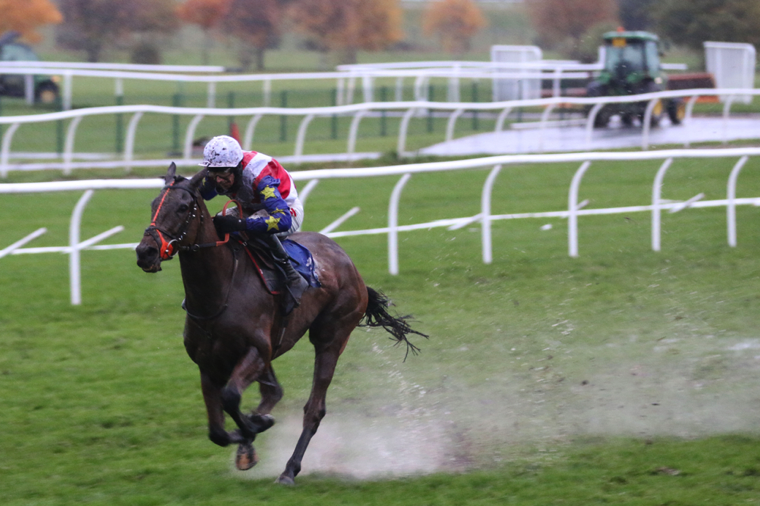
A rainy day at Market Rasen (Mick Atkins, Shutterstock)
Track conditions can change between the publication of a racecard and the start of a race. Rainfall is an obvious influence, particularly on turf, where prolonged showers may turn relatively good ground into a softer, more demanding surface.
Dry weather can have the opposite effect. Warm temperatures and wind may help a course dry, although the rate depends on drainage, soil, and previous rainfall. Consequently, a going description issued early in the morning may not perfectly reflect conditions later in the afternoon.
Racecourse maintenance also plays a role. Turf courses may be watered to manage ground conditions, while dirt tracks are regularly harrowed and maintained to influence surface consistency. Such work is part of normal course preparation, but bettors should still pay attention to official updates.
Consider a horse with strong performances on good ground but limited evidence of handling soft conditions. If substantial rain arrives before its race, the original assessment may need revisiting. Checking updated going reports, withdrawals, and race-day observations can help bettors account for changes before placing a wager.
Using Track Knowledge to Assess Betting Opportunities
Understanding a course becomes useful when applied to individual runners. A horse’s previous record at the venue offers one starting point, but the number of appearances matters. One victory from a single visit provides less reliable evidence of course suitability than several competitive performances.
Results at similar venues can also reveal useful patterns. A horse that handles tight turns and short straights elsewhere may be suited to an unfamiliar course with comparable features. Equally, repeated struggles on testing ground deserve attention when similar conditions are expected.
These observations can influence how bettors interpret the odds. A well-supported favourite might have excellent recent form but little experience on the expected surface. Another runner may have less impressive finishing positions yet possess a stronger record under the conditions it will encounter.
Course suitability should still be weighed alongside the quality of opposition and the available price. A favourable layout doesn’t guarantee victory, particularly when several capable horses share similar strengths. Even when a course appears favourable, its characteristics are only one part of the assessment and cannot eliminate the uncertainty surrounding a race.
Making Course Knowledge Part of the Betting Decision

Alexanderstock23, Shutterstock
Racecourse characteristics can explain why horses perform differently from one meeting to another. Bends, elevation, racing surfaces, and changing ground conditions all influence the challenges runners face, making previous results more meaningful when viewed in context.
Before placing a wager, bettors should compare each contender’s experience with the upcoming course and check the latest conditions. Understanding the track adds useful evidence to the decision, even though racing outcomes always carry uncertainty.